hardware / 2023–24
Haptic glove for AR escape rooms
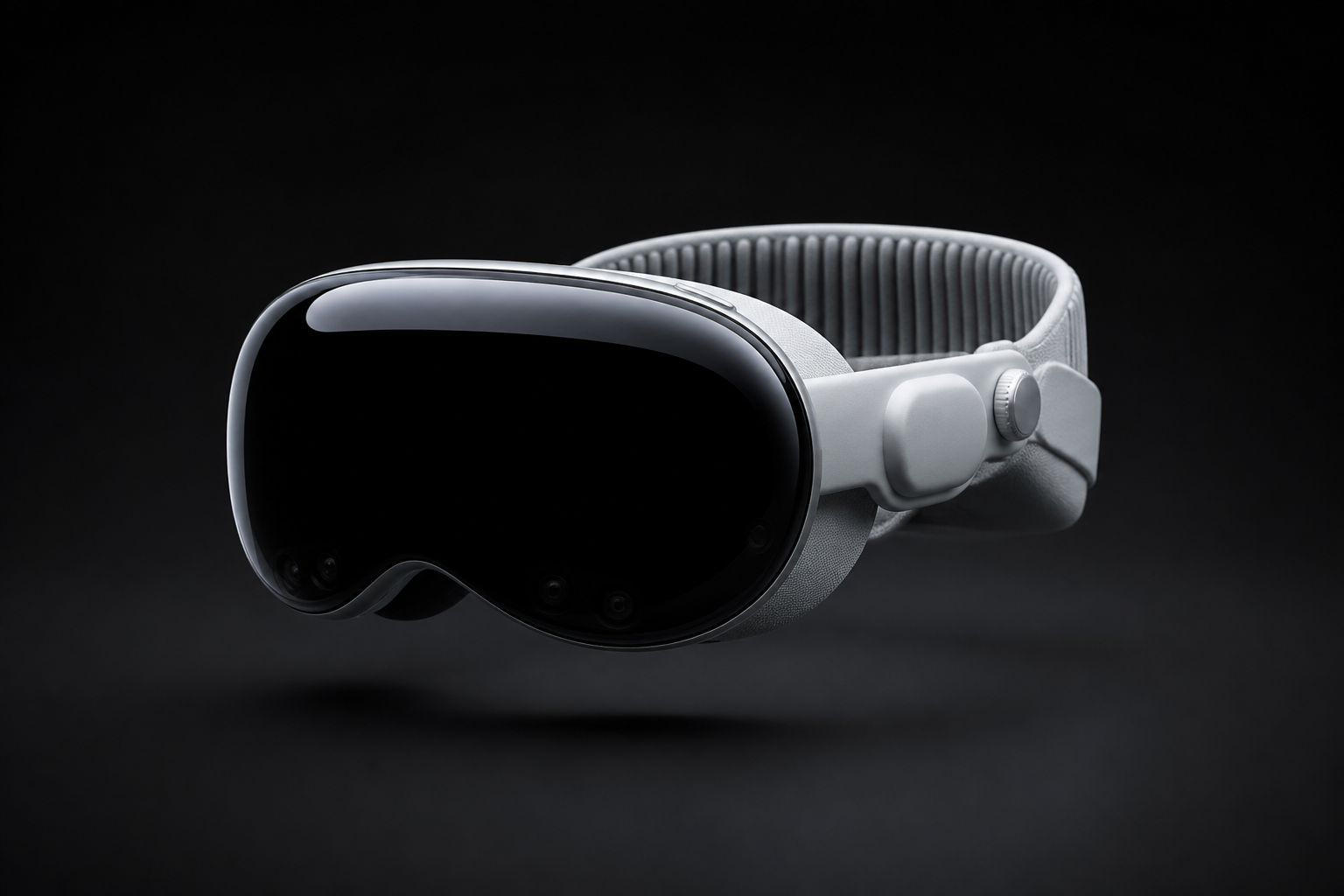
Vision Pro fingertip collisions, three ESP32 nodes, and a glove that can pin, buzz, and change temperature.
01 / The idea
Undergraduate thesis at De La Salle University (ESCA-1-2324-C2, AY 2023–24) with Patricia Guerrero, advised by Dr. Alexander Co Abad: Development of a Wearable Haptic Glove for Augmented Reality-Enhanced Escape Rooms.
The problem is blunt. A room-scale AR prop has a collider and a mesh, and nothing for the skin. We wanted force, a pin-array, vibration, and heat or cold on the hands, timed to an escape-room beat, while Apple Vision Pro did the tracking.
02 / Engineering
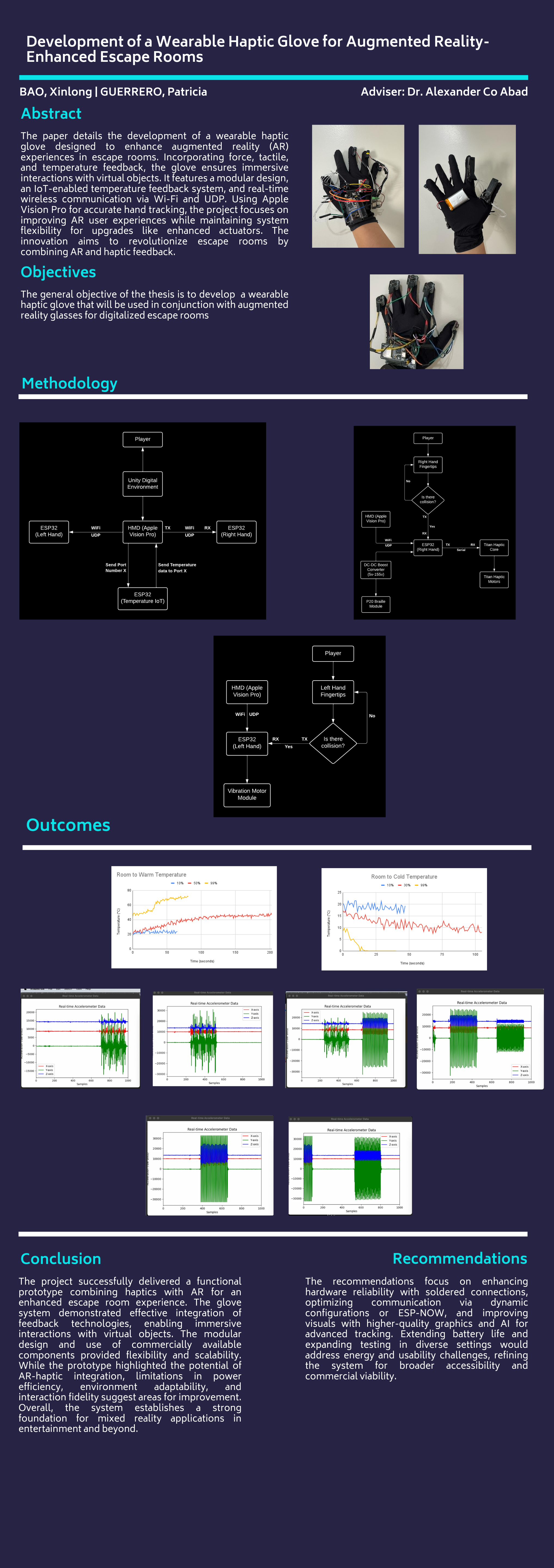
Unity XR Hands places collision spheres on tracked fingertips. On enter or exit with objects tagged Solid, Obstacle, or hands, C# scripts send a single ASCII byte over UDP port 1234. Hit spheres turn red. Thumb and index drive 4×4 P20 pin maps; middle, ring, and pinky fire vibration channels; the left glove maps five coin motors.
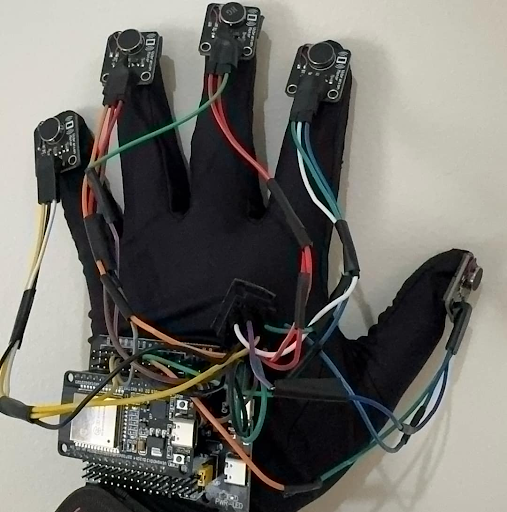
Three ESP32-WROOM-32 nodes sit on Wi-Fi as STA, each listening with AsyncUDP. The right glove shift-outs two P20 16-pin cells and talks UART onward to a Titan board for PWM vibrate strings. The left glove holds five fingertip coin motors. A third node reads an LM35 and drives a TEC through an L298N (heat and cool as opposite H-bridge directions). An earlier Bluetooth SPP path exists in the firmware history; the Vision Pro loop is UDP.
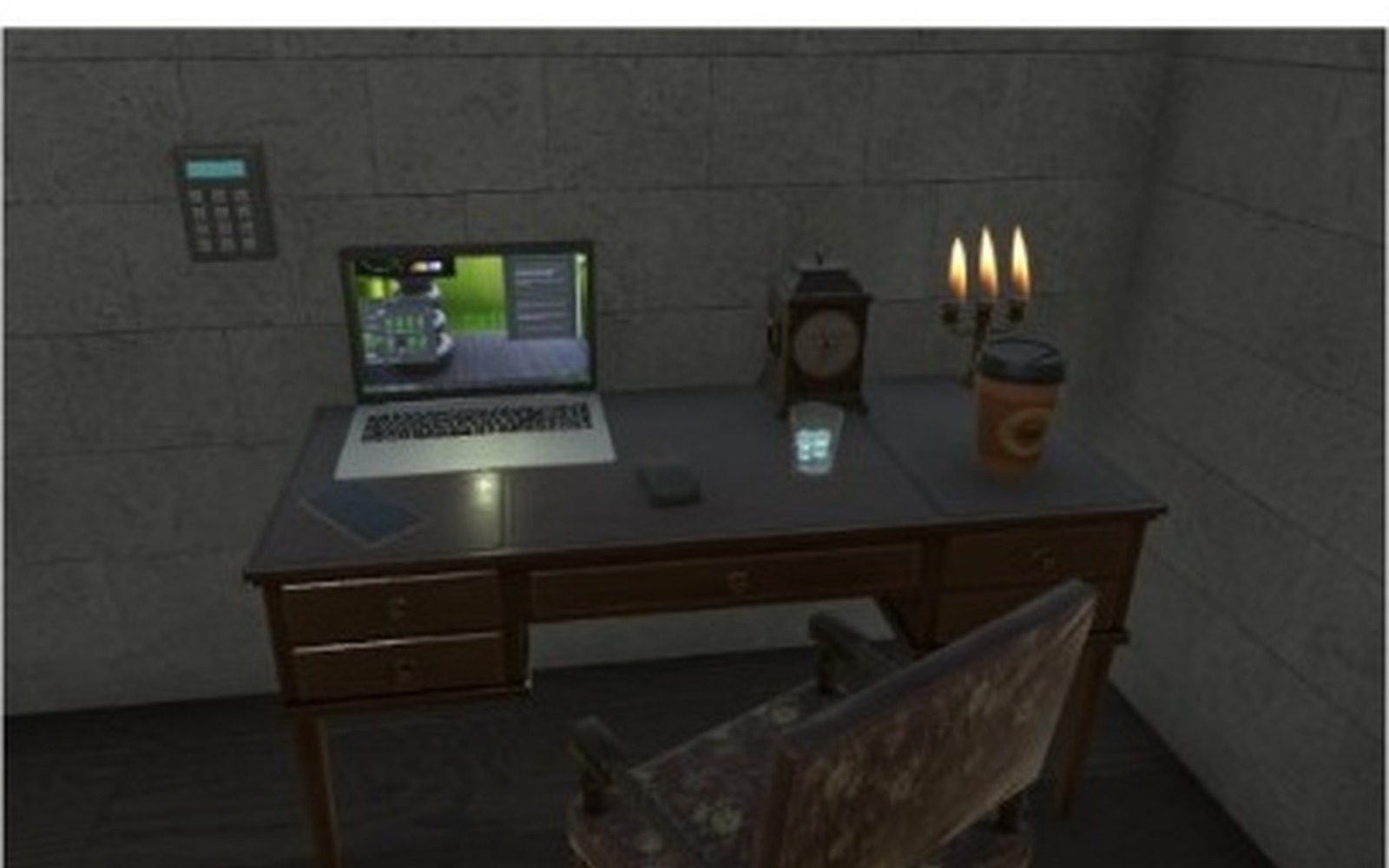
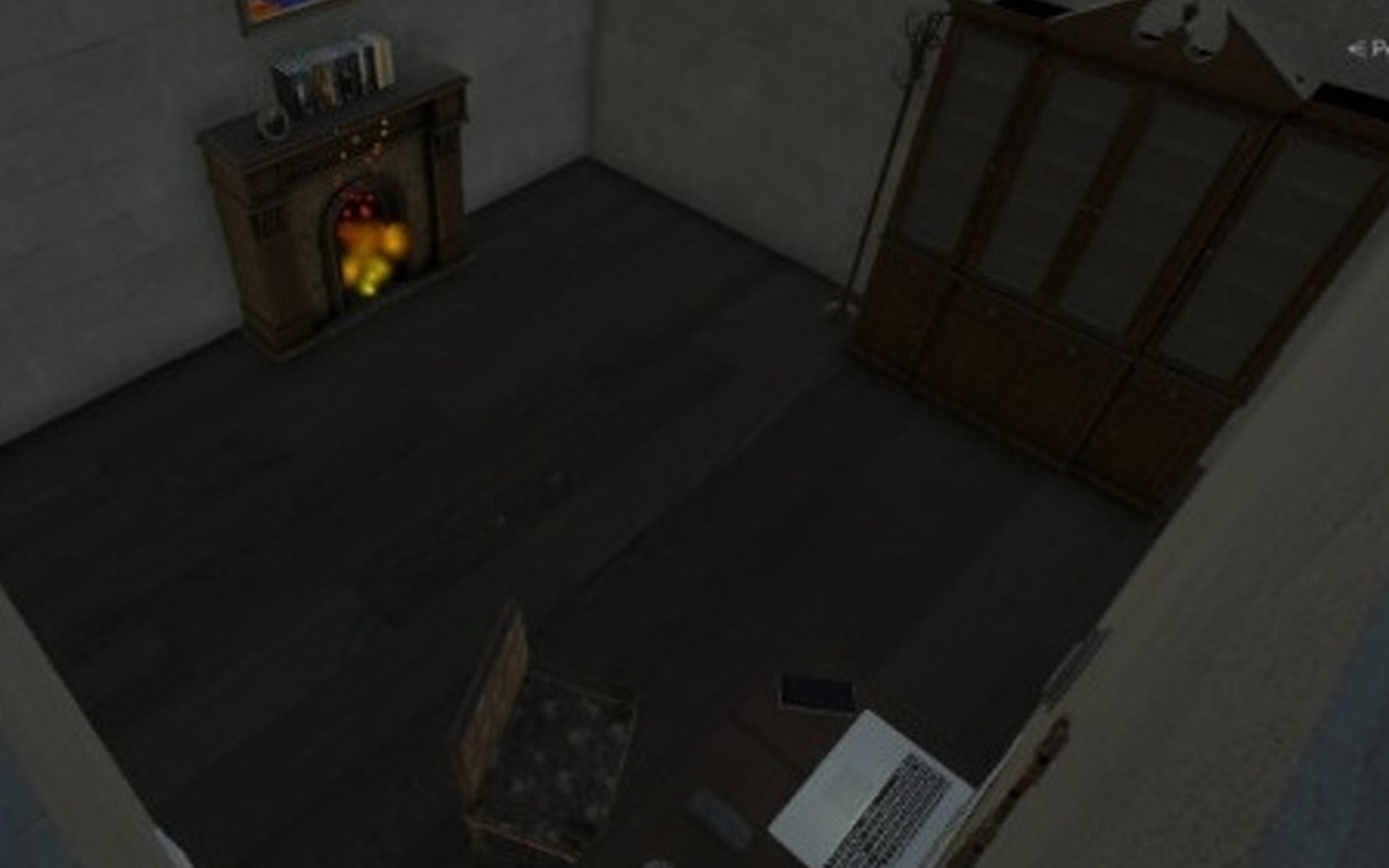
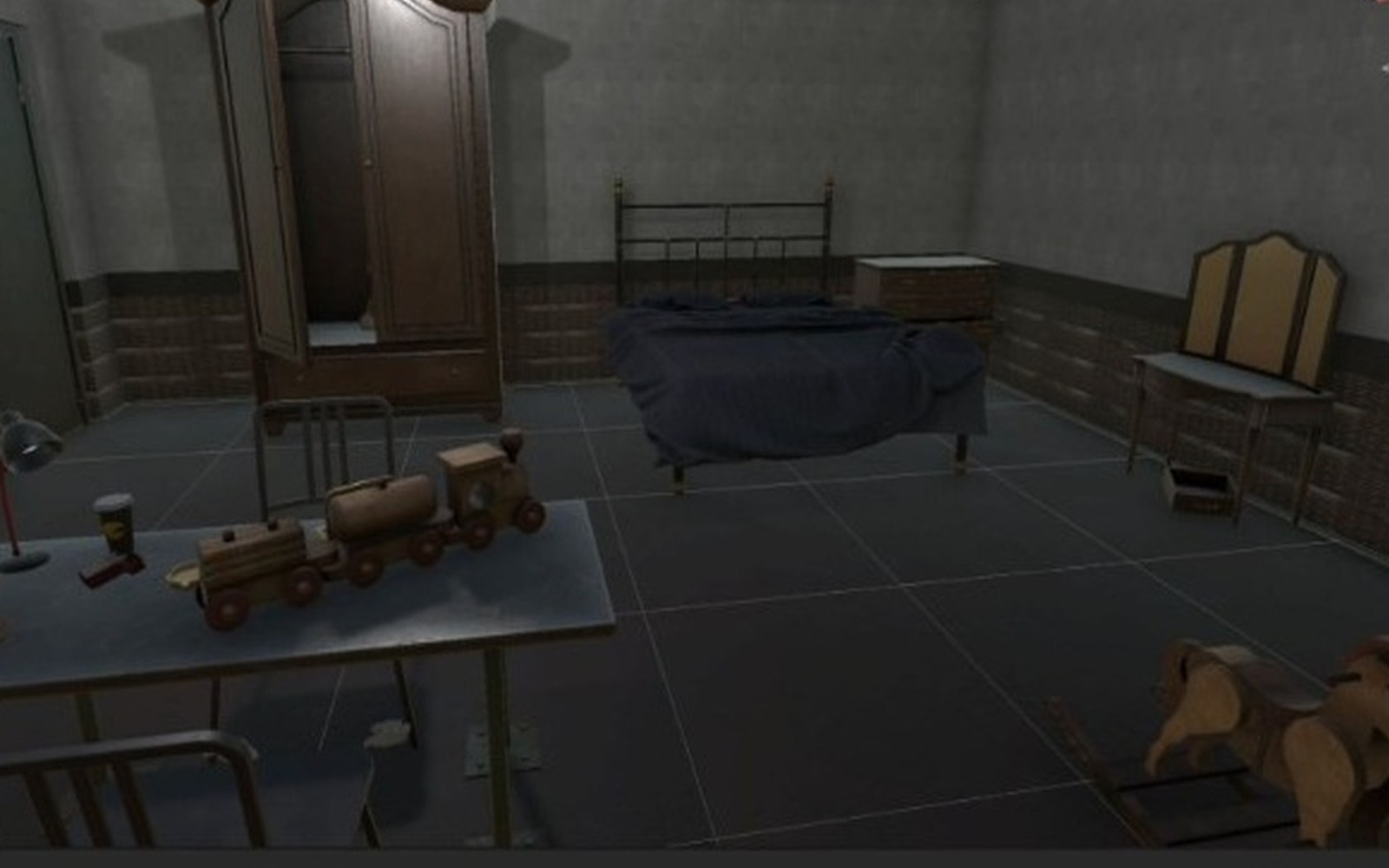
The scene is a small AR furniture set: cabinet, drawer, switch, toy horse, a cold-distance cube that turns blue inside half a metre. A later Unity project in this workspace, VR Playground, is the same escape-room idea with no wearable stack — poster, keypad, safe, key, socket, confetti. Blink on a FireBeetle 2 is later ESP32 bring-up, not this protocol.
03 / In practice
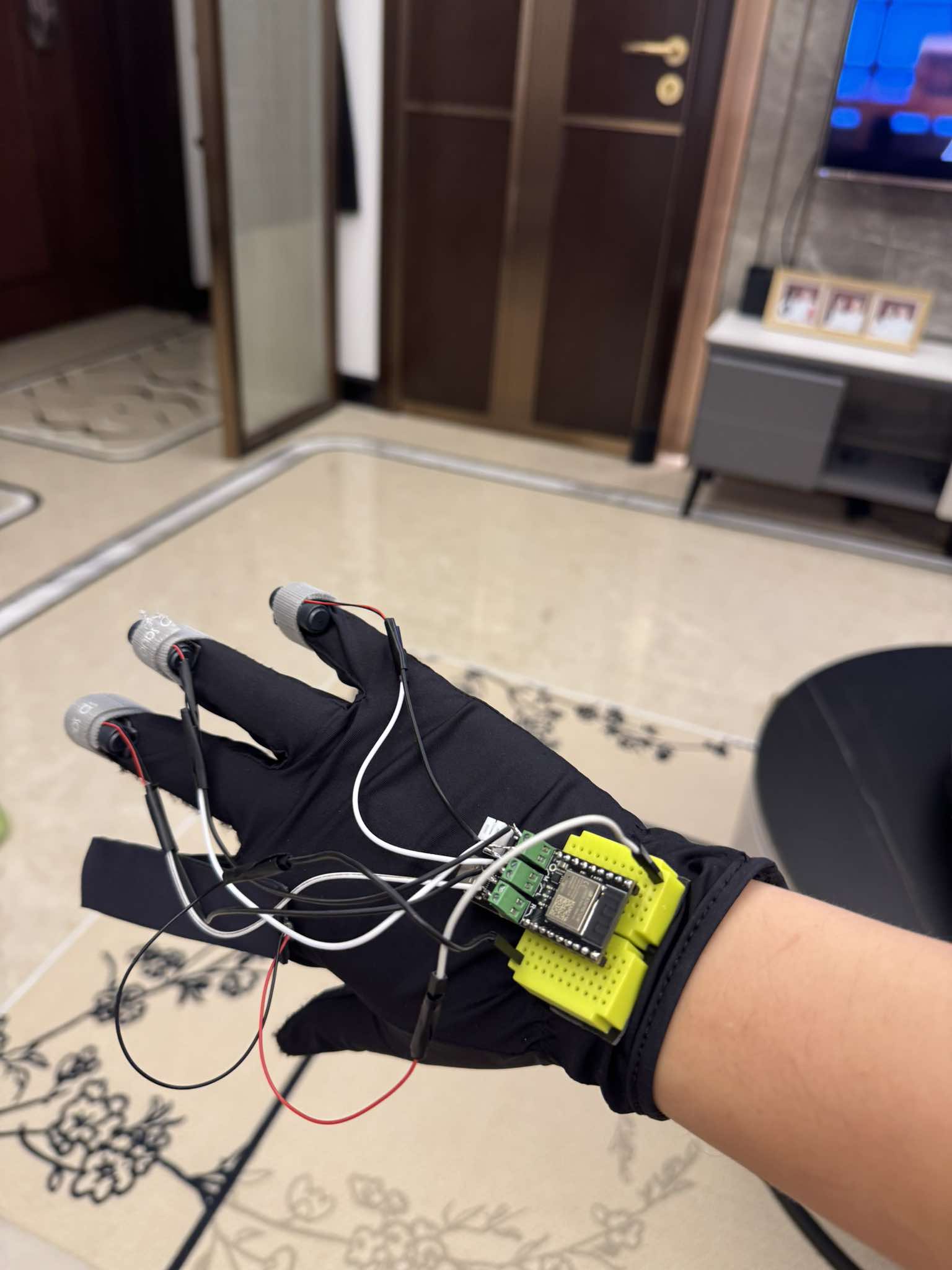
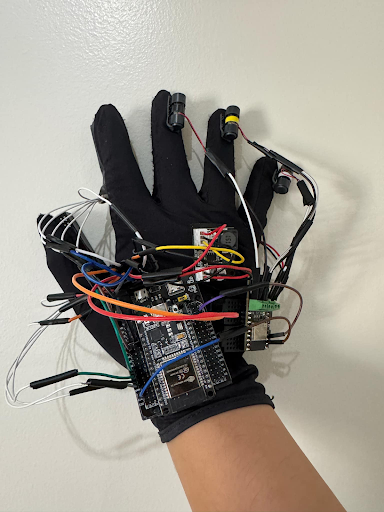
Flash the three boards, join them to the same LAN as the headset machine, run the Unity/AVP player. You see black gloves, a dorsal DevKit, fingertip actuators, and a waist bag of wiring. In the headset, furniture collisions flash the spheres; pins rise, motors buzz, the TEC ramps.
The folders still hold the evidence: P20 self-test clips, two-cell collisions in Vision Pro, third-person walk-arounds, ESCA presentation video, serial logs of room-to-cold and room-to-hot, and plots at 10 / 100 / 300 Hz. There is no written user-test codebook in the tree — the recordings are lab demos, not a scored study.
04 / What I learned
The loop closed: collision in the HMD, sensation on the hand, thermal ramps you can plot. What did not: two overlapping LAN address schemes in firmware versus Unity; left-hand enter and exit sending the same byte; flex and MPU sketches never in the Unity path; ESP-NOW recommended on the poster and never built; jumper wire where the poster wanted solder.
Takeaway: an end-to-end wearable haptics prototype — custom actuator protocol, multi-node Wi-Fi, XR collision maps — not a product.